Historical Tents
Subcategories
-

Anglo-Saxon Geteld
-
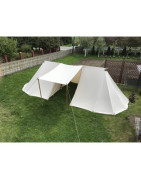
Long Double Geteld
-
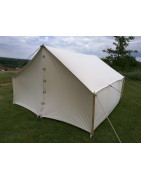
Wall Tent
Here is a concise description of the wall tent in English, perfect for a product blurb or a historical overview:
The Classic Wall Tent
The wall tent (also known as a sheepherder tent) is a timeless design characterized by its four vertical walls, providing significantly headroom and usable floor space.
Key Features:
-
Vertical Walls: These allow occupants to stand upright and place furniture, like cots or stoves, right against the edges.
-
Breathable Canvas: Traditionally made from heavy-duty cotton duck canvas, which allows moisture to escape while remaining naturally windproof and water-resistant.
-
Four-Season Durability: Known for its ruggedness, it is often used with a small wood-burning stove for winter camping or hunting expeditions.
Historical Significance:
-
Military Heritage: A staple for army officers and field hospitals during the Revolutionary and Civil Wars.
-
The Golden Age of Exploration: Used extensively by 19th-century pioneers, gold miners, and early 20th-century safari explorers.
-
Modern Use: Today, it remains the gold standard for historical reenactments, long-term hunting basecamps, and luxury glamping setups.
-
-
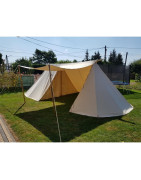
Merchant Tent
-
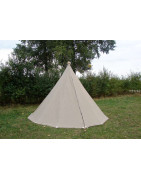
Cone Tents
-
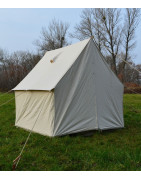
Camp tent
-
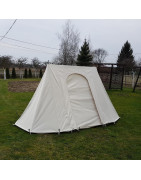
Soldier Tent
-
Wedge / A-Tents
-

Medieval Pavilions
-
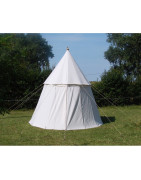
Medieval Umbrella
-
Barn Tent
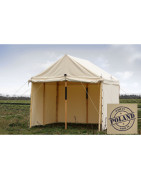
Tents of this type date to the second half of the 15th century. You can find them for example in the Swiss manuscript The Amtliche Berner Chronik (or Chronicle of Bern), dating to 1478-1483 r.
-
Market Stalls
-
Roman Tents
-
Tarpaulins
-
Other Tents
-
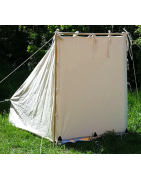
Baker Tent